Origin
Every platform claims to support free expression, but they all sit on top of a permission layer — algorithms, moderators, policy swings, shadow bans. TextScore shows what those hidden signals look like from the creator's side. I wanted a place where writing couldn't be throttled, erased, or owned by someone else. OpenWord is built on a simple idea: publish without permission, own your words, and let quality (not censorship) decide what survives.
Problem & Solution
Key Systems
Instead of moderation overhead, three mechanisms that make quality self-enforcing.
The Voting System
Allows readers to express opinions on content quality. 8 free votes/day, reputation-weighted voting, upvotes/downvotes, and curation rewards that incentivize honest signal.
Multi-Stage Anti-Spam
Three progressive gates: Stage 1: 3 free posts per wallet. Stage 2: Wallet signature for proof of humanity. Stage 3: Small OW token fee per action. Each layer adds friction only when needed.
Premium Quality Gate
Two-part system: Reputation Gate: minimum author reputation required. Quality Deposit: refundable OW token deposit per post. Creates natural accountability without centralized review.
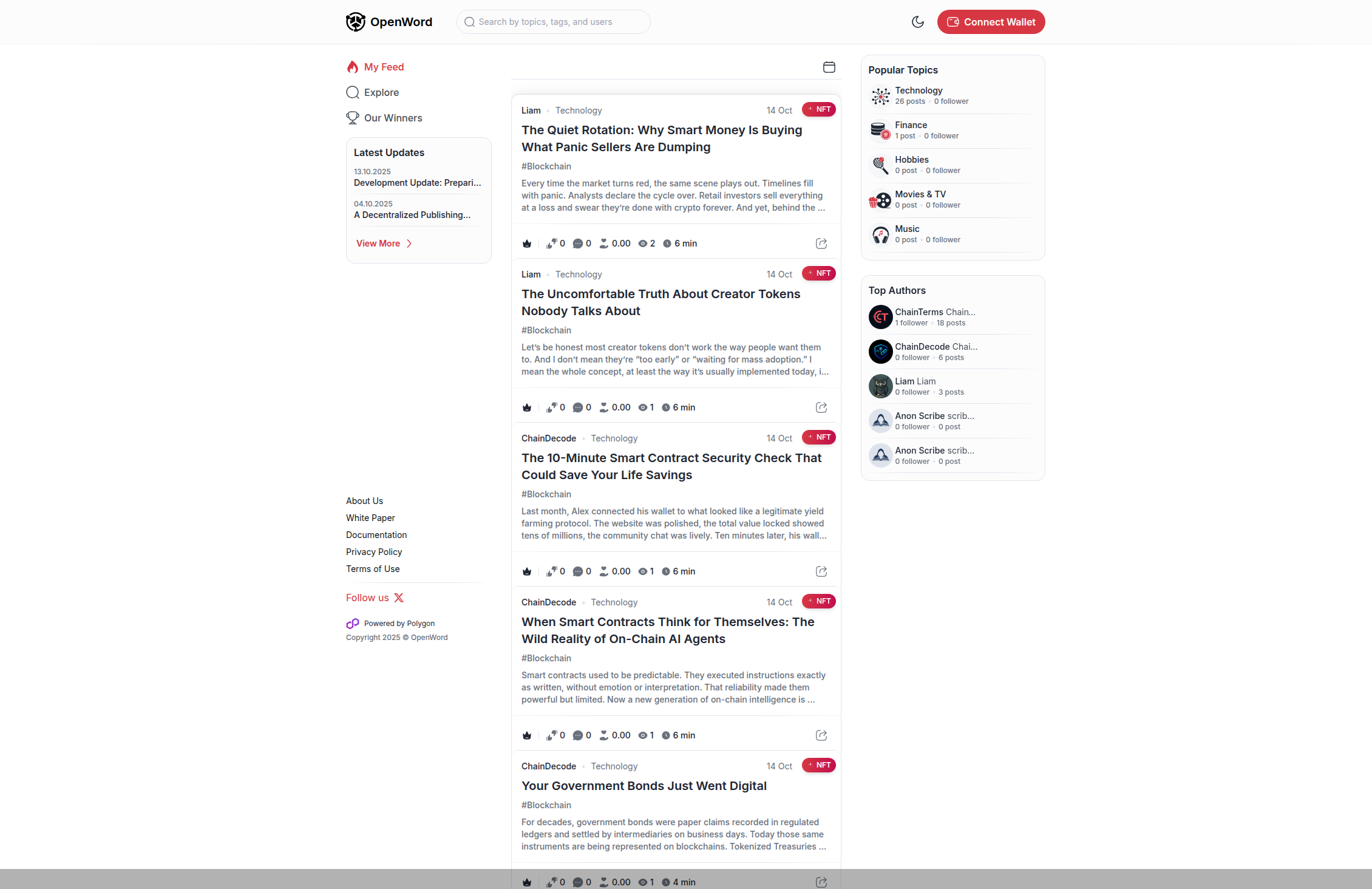
In Action
Business Model
Revenue comes from small fees on tips, sales, and NFTs, and 30% goes back to creators and community. The math is in the table.